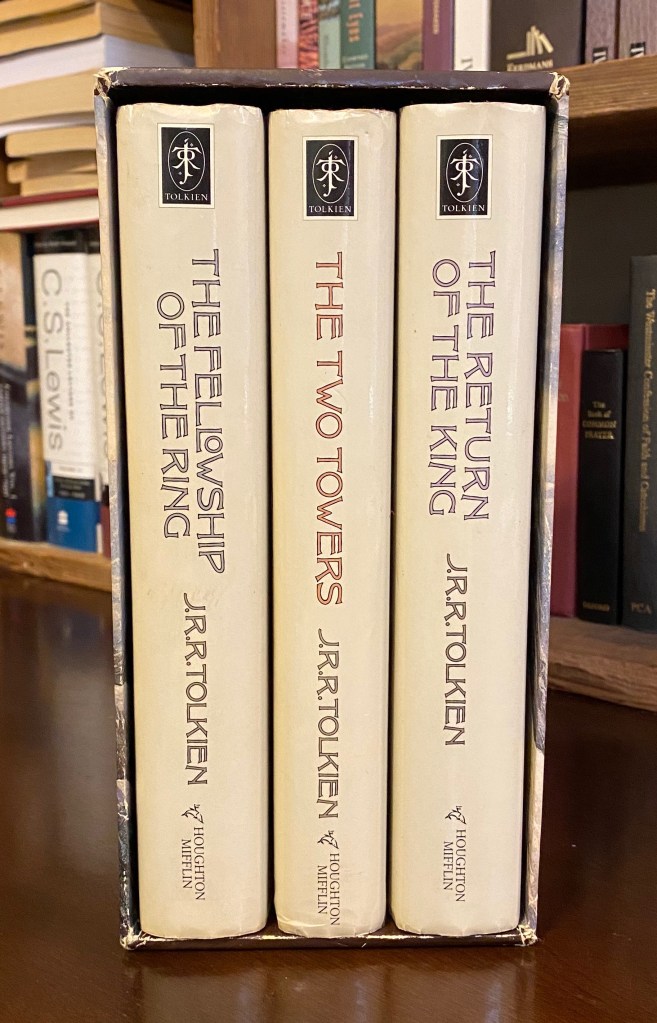
When it comes to great books and great music, we don’t mind repetition. We know how the story ends, and we’ve memorized the tune, but we still come back time after time. I recently reread The Lord of the Rings. It’s my third time through J.R.R. Tolkien’s masterpiece. This time I can’t stop thinking about Boromir.
I never liked Boromir. I saw him as a failure whose selfish, prideful actions led to division and death. I see him differently now. Frankly, I am Boromir. If we’re honest, we’re all Boromir. No, we’re not all characters in an epic fantasy, but attentive readers of the LOTR will see a clear reflection of their own conflicted hearts in Tolkien’s portrayal of Boromir.
Boromir’s titles and reputation precede him. He is the great Captain of the White Tower and the son and heir of Lord Denethor II, the ruling Steward of Gondor. He is a noble warrior and honored leader of men. He is one of only two men invited into the Fellowship of the Ring. He reminds me of one of King David’s Mighty Men. Yet Boromir falls.
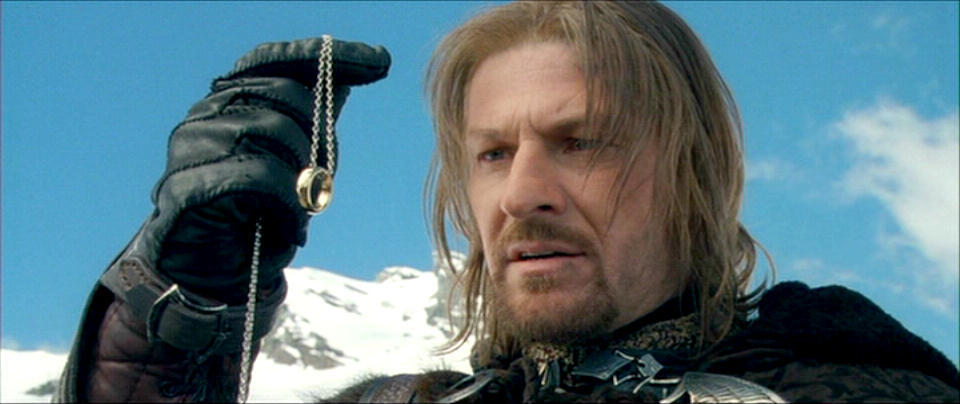
He succumbs to the temptation of the One Ring and tries to take it from Frodo. Ralph Wood, in The Gospel According to Tolkien, identifies the “three deadly powers” of the Ring: “invisibility, longevity, and the coercion of will.” In Frodo’s Journey: Discover the Hidden Meaning of the Lord of the Rings, Joseph Pearce puts it more starkly: the Ring is “synonymous with sin. . . . Putting the Ring on is putting sin on.” Boromir defends his actions with several ends-justify-means arguments: “It won’t corrupt me!” “It really should be mine anyway.” “It will give me great power, and I’ll use it for good!” Although his sin sets in motion a series of events that lead to the breaking up of the Fellowship and his own death, Boromir finishes well.
Boromir’s repentance and forgiveness is one of the most moving scenes in the LOTR. Immediately after he attempts to steal the Ring he laments his actions: “What have I done?” He admits that “A madness took me.” “I am sorry. I have paid.” As he lay dying he confesses to Aragorn, “I have failed.” Aragon replies, “No . . . You have conquered. Few have gained such a victory. Be at peace!” Aragon forgives.
Remember King David’s temptation and fall? How he tries to play God with other people’s lives? His abuse of power leads to adultery with Bathsheba and the murder of her husband, Uriah the Hittite, one of David’s loyal Mighty Men. But David also finishes well. His repentance is chronicled in Psalm 51. Psalm 51 is a prayer that anyone, at any point in life, can pray. It is a template for Christian prayer and life. This outline captures its essence, and it’s easy to remember: “Forgive me, change me, use me.”
Forgive Me
1 Have mercy on me, O God,
according to your unfailing love;
according to your great compassion
blot out my transgressions.
2 Wash away all my iniquity
and cleanse me from my sin.
Change Me
10 Create in me a pure heart, O God,
and renew a steadfast spirit within me.
11 Do not cast me from your presence
or take your Holy Spirit from me.
12 Restore to me the joy of your salvation
and grant me a willing spirit, to sustain me.
Use Me
13 Then I will teach transgressors your ways,
so that sinners will turn back to you.
14 Deliver me from the guilt of bloodshed, O God,
you who are God my Savior,
and my tongue will sing of your righteousness.
15 Open my lips, Lord,
and my mouth will declare your praise.
Boromir’s lust for power results in division of the Fellowship and his own death. King David’s abuse of power results in adultery and murder. Jesus Christ’s cross-shaped power, through which He empties Himself, takes on the form of a servant, and dies in our place, makes forgiveness available to anyone and everyone.
Lord, forgive me, change me, use me.
 A Place to Write
Brad, I loved reading this!! The analogy to David was great and yes, we are all Boromir. I am now a follower of you place. I’m so delighted!!,