

To those who are elect exiles. . . . Stand firm.
St. Peter
Norman Rockwell is cheesy, or so I thought until I visited the Norman Rockwell site in Stockbridge, Massachusetts. His studio is there; a museum is there. To see his drawings, illustrations, and paintings “live” is quite a moving experience.
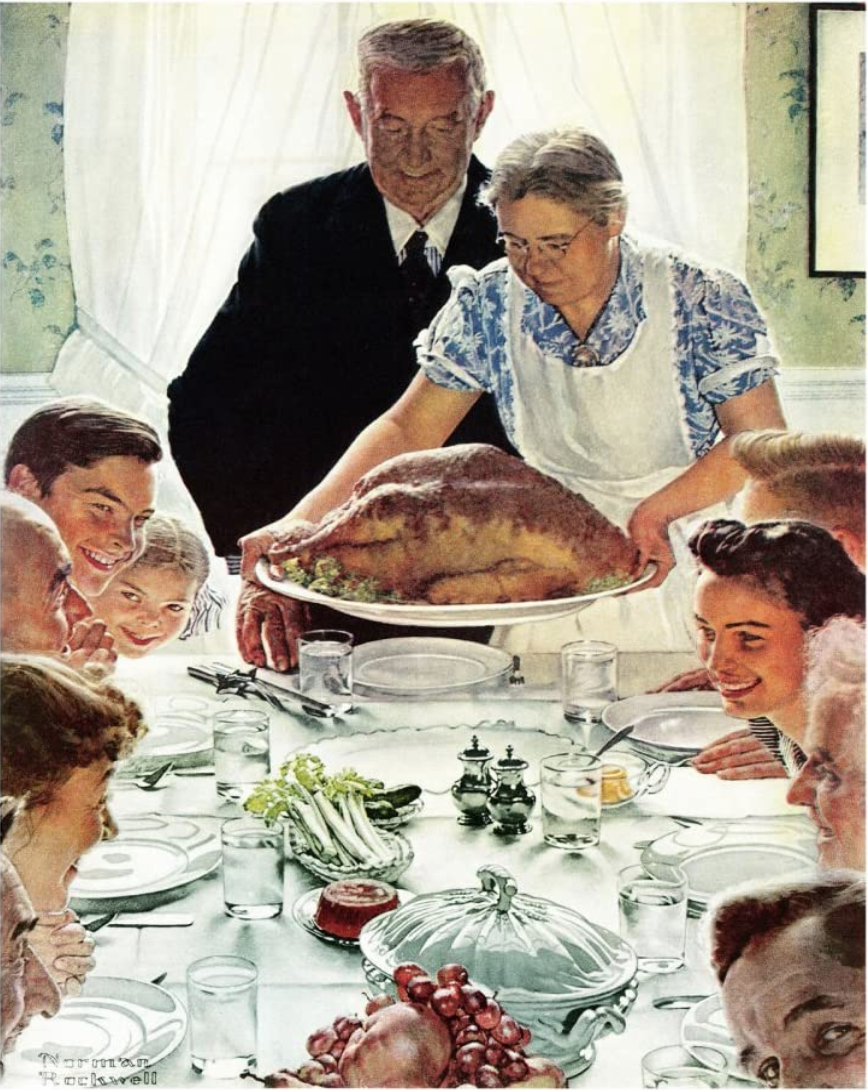
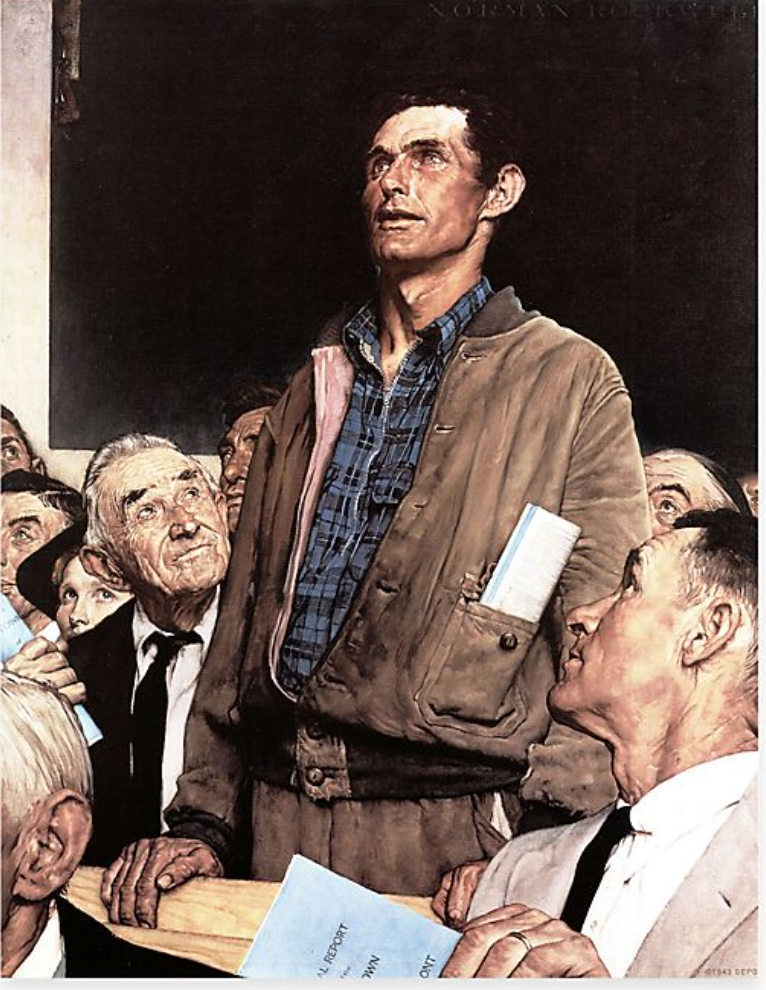
I remember standing in front of the Four Freedoms. Painted in 1943 and based on Franklin Delano Roosevelt’s January, 1941 State of the Union address, Freedom of Speech, Freedom of Worship, Freedom from Want, and Freedom from Fear depict essential human rights. Rockwell captures the expression of these rights in vivid lines and colors (see the paintings in the museum by clicking here). He tells stories with paint.
A Christian Job Description
It’s a blessing to live in a country that pursues these values, but America inevitably fails and frustrates us, doesn’t it? Ultimately, our earthy country is not our hope and home. The book of 1 Peter is a timely tonic. In this short letter Peter gives us what amounts to our Christian job description, wherever we happen to live. Here it is:
Christians are Foreigners
2:11 Beloved, I urge you as sojourners and exiles to abstain from the passions of the flesh, which wage war against your soul.
Feel like a foreigner? You should. 1 Peter, perhaps more than any other book in the New Testament, points us to the reality that Christians, whoever and wherever they are, should have a keen sense that they just don’t fit. Peter calls his readers “elect exiles” (1:1). Bible translations use various words to interpret the Greek in 2:11: sojourners, exiles, foreigners, strangers, pilgrims, resident aliens, etc. You get the point.
Peter reminds us that there is a cost to following Christ. We could be marginalized by our society, alienated in our relationships, and our socioeconomic well being could be threatened. The bottom line: “I have written briefly to you, exhorting and declaring that this is the true grace of God. Stand firm in it” (5:12).
Christians are Ambassadors
2:12 Keep your conduct among the Gentiles honorable, so that when they speak against you as evildoers, they may see your good deeds and glorify God on the day of visitation.
Knowing that we are foreigners could lead us to two mistakes: First, we could take the “I’m pulling out” approach. I’m a foreigner here, so “to hell with America, my neighbors, my world. All I need is Jesus and my holy huddle.” Second, we could go with the “I’m giving in” approach. This Christian stuff is fine on Sunday, and an occasional Wednesday, but it doesn’t work midweek. I’m not taking Christianity with me to work, school, the ball field, or my relationships.
Peter reminds us that although we are citizens of the Kingdom of God, we are ambassadors to Kingdoms of this world. Our co-workers, classmates, friends, and neighbors are watching. Pulling out or giving in are not options. Paul specifically reminds his readers in Corinth that “we are ambassadors for Christ, God making his appeal through us” (2 Cor. 5:20).
Before he became a Christian, Sheldon Vanauken, author of A Severe Mercy, noted in his journal,
The best argument for Christianity is Christians: their joy, their certainty, their completeness. But the strongest argument against Christianity is also Christians–when they are sombre and joyless, when they are self-righteous and smug in complacent consecration, when they are narrow and repressive, then Christianity dies a thousand deaths.
As important as the recent election was, it does not compare to another election! All Christians are elected by God to be his representatives and public servants. When we honor our boss we are doing evangelism. When wives show respect for their husbands they are doing evangelism. When husbands are caring and understanding toward their wives, they are doing evangelism. When all of us are humble, sympathetic, tender, loving, we are doing evangelism (see 1 Peter chapters 2 and 3).
Christians are Sufferers
2:21 For to this you have been called, because Christ also suffered for you, leaving you an example, so that you might follow in his steps. 22 He committed no sin, neither was deceit found in his mouth. 23 When he was reviled, he did not revile in return; when he suffered, he did not threaten, but continued entrusting himself to him who judges justly.
Peter has come a long way. Remember, it was Peter who pulled Jesus aside and rebuked him for predicting his own suffering and death (Matt. 16:22). It was Peter who publicly denies knowing Jesus or having anything to do with him (Luke 22:60). Now he calls all Christians to deliberately walk in the footsteps of their suffering savior. Faithfulness to Jesus Christ will lead to sacrifice and suffering, but this too is evangelism!
In her excellent commentary on 1 Peter, Karen Jobes writes, “Peter’s call is to suffer unjustly, to suffer even though one has done nothing to provoke it or deserve it, simply because one is a Christian. . . . Peter further exhorts the Christian to keep on doing good even when unjust suffering continues to be the result.” She emphasizes that “Jesus’ suffering is not simply an example or pattern or model, . . . he is the paradigm by which Christians write large the letters of his gospel in their lives.” When the gospel is written in all caps across our suffering, people will see Jesus!
Christians are Safe in Christ
2:24 He himself bore our sins in his body on the tree, that we might die to sin and live to righteousness. By his wounds you have been healed. 25 For you were straying like sheep, but have now returned to the Shepherd and Overseer of your souls.
Finally, no matter what the circumstance, believers are safe in Jesus Christ. Peter concludes chapter 2 by pointing us to the trial and crucifixion of Jesus (2:22-25). When Jesus is ridiculed and slandered, he doesn’t ridicule and slander in return. When he suffers unjustly, he doesn’t retaliate. He is innocent, but he bore our sins on the cross. His wounds heal our wounds, our deepest wounds. We are not innocent. We are lost sheep and sinners in need of salvation.
Jesus perfectly accomplishes everything Peter calls us to do. So we look to him. We follow in his steps. He is our hope. “For Christ also suffered once for sins, the righteous for the unrighteous, that he might bring us to God” (3:18). We’re home.
 A Place to Write